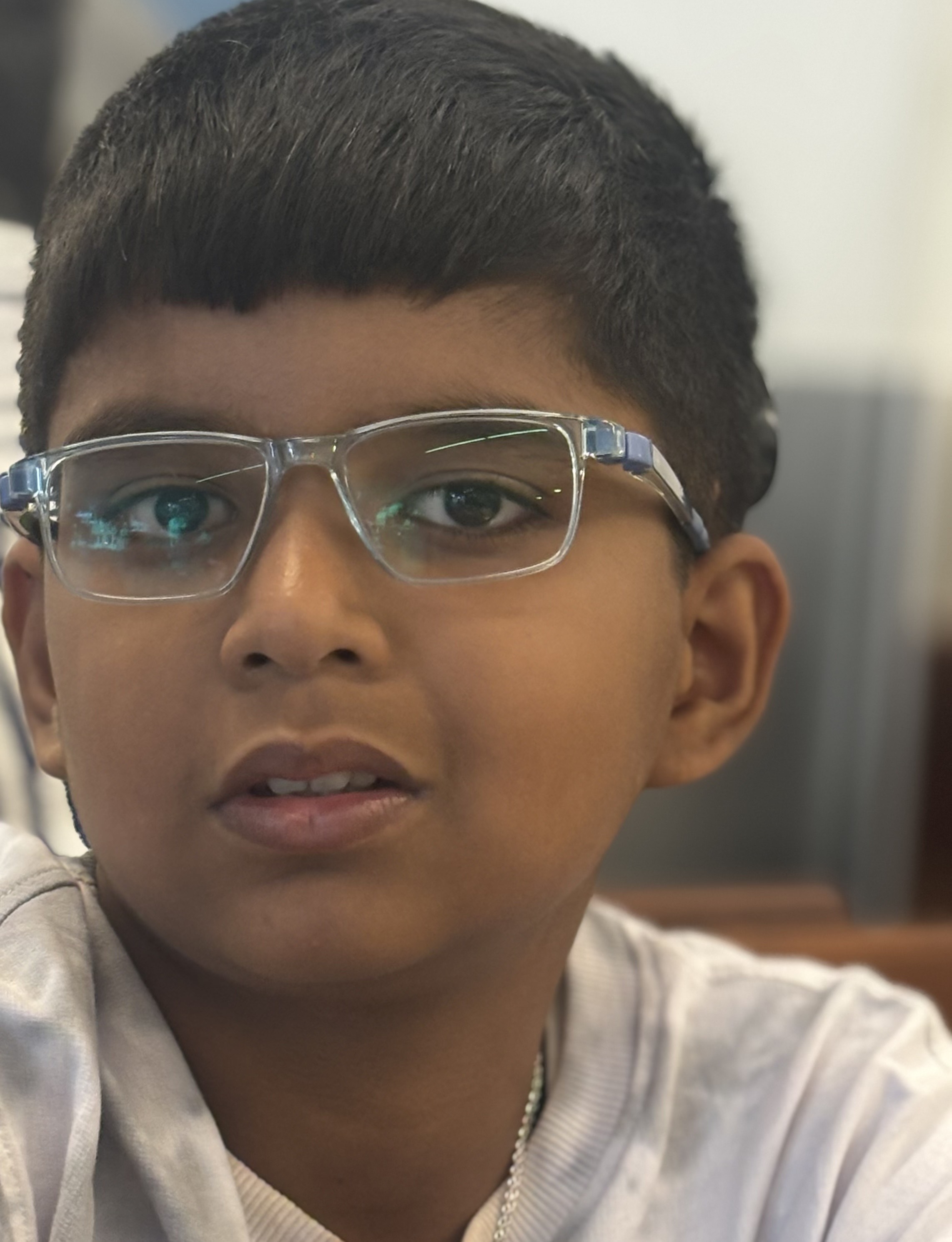
My name is Charvik Kumar Prasad and I am 11-years-old. Like most other children, I like being friendly, playing outdoor and indoor games with my friends, and swimming. But there is something unique about me. I would like to share with you the story of my cochlear implant.
A cochlear implant is a hearing device which helps me to listen to all the sounds around me. There is an internal receiver that is surgically placed in a groove in the skull. There is also an external processor which receives sound signals, converts them into electrical signals, and sends them to the internal receiver. These electrical signals are then sent to the auditory nerve.
I need a cochlear implant so that I can hear like an average human being. The hair cells in my cochlea gradually became damaged when I was very young and now cannot do their job of converting the sound waves into electrical signals and transmitting them to the auditory nerve. They cannot be revived or replaced and are once-in-a-lifetime. That is why I need a device to help me hear. The doctors were not able to explain the cause of the hair cells getting damaged.
I was 3-and-a-half years old when I got the surgery, so I cannot remember much. However, after the surgery I remember wearing a bandage around my head. When I started using the implant, I got surprised that I was able to listen to sounds clearly for the first time. It took me several months to adjust to the implant.
During this time, I went to speech therapists and audiologists to help me adjust to the implant and feel comfortable. Pronunciation was also a challenge. I needed to be taught how to pronounce letter sounds and words.
Being able to respond to my parents was a big step for all of us!
My parents, friends, school teachers, speech therapists, and audiologists helped me a lot after I got my cochlear implants.
My parents supported me by finding a solution for my issue, getting the implant, finding therapists, and helping me learn. My mother also helped me be brave and make friends. She gave me tips like how to introduce myself to new people and ask them to repeat themselves when I couldn’t understand what they said.
My coaches also encouraged me to try various sports. I used to be so scared to do these things when I was younger because of my external processors. Head contact sports and swimming were challenging, but now I am able to play tennis, basketball, and football, because I have explained to my friends, coaches, and teammates that they need to be careful with my processors.
Another challenge I face is the volume of background noise making it difficult for me to hear conversations. This is still a challenge sometimes, especially in crowded places like school.
At school, I am able to manage myself by being independent in knowing the basic things to do, like changing my processor batteries. Reducing background noise, like from the fans, helps me understand lessons and conversations. Sitting closer to the board also helps me focus better. When I need help, I give my teacher feedback and ask for support.
Even though I face challenges, I am proud that I am able to hear like an average human. I am proud of myself for being hard-working and never giving up.
My goal for the future is to convince people that they can achieve anything they want to even if they have a problem. I would say to young children with hearing challenges that no matter what, you should stay positive and determined.
I hope, dear readers, that you learn from my story to have and show empathy for people even if they have problems. Some people’s lives are not easy.
-Charvik